
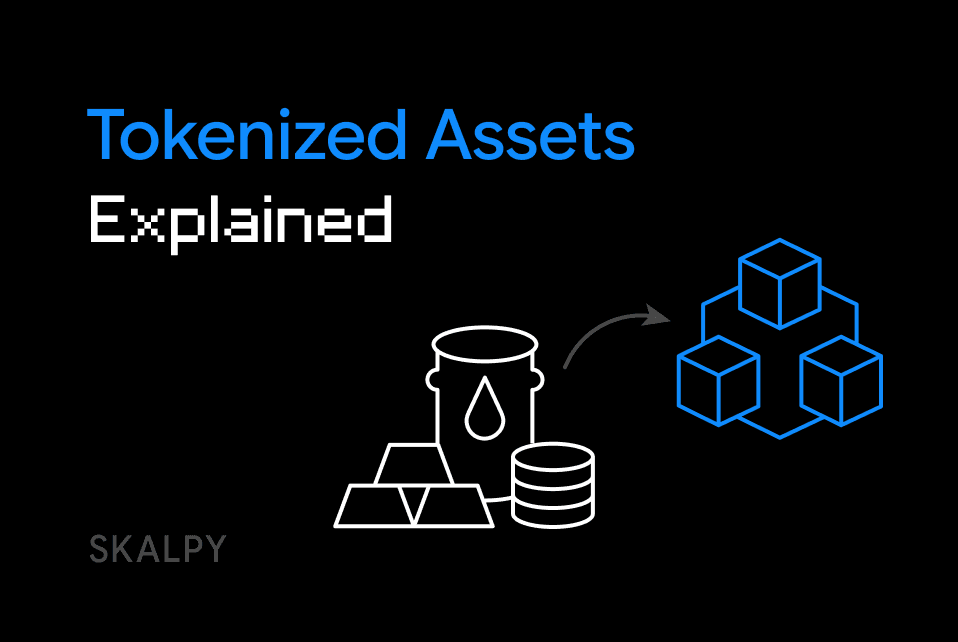
The line between crypto markets and traditional finance is blurring. Stocks, oil, gold, and real estate are increasingly available on-chain, tradeable 24/7, without brokers or settlement delays. Here's what tokenized assets are, how they work, and what this shift means for your trading.
What is a tokenized asset?
A tokenized asset is a digital representation of a real-world asset, recorded on a blockchain. Think of it as a blockchain-native certificate of ownership: take any asset with a market value – a company share, a barrel of oil, an ounce of gold, a stake in a building – and issue a token that represents it. That token can be freely traded, transferred, and held in a digital wallet.
Key idea: Tokenization uses blockchain infrastructure to move ownership of real-world assets on-chain, enabling faster settlement, fractional ownership, and global access without traditional intermediaries.
The most familiar examples are already in your wallet: USDC and USDT are tokenized dollars. But the same logic now extends to equities, commodities, treasuries, and more.
What can be tokenized?
Technically, almost any asset with clear ownership rights. In practice, the market is converging on a few high-impact categories:
Stocks & bonds
Tokens tied to shares of public companies and debt instruments
Commodities
Oil, natural gas, metals – commodity market exposure without futures contracts
Precious metals
Gold, silver, and platinum as tokens backed by physical holdings
Real estate
Fractional stakes in commercial and residential properties worldwide
IP & royalties
Copyrights, patents, and revenue streams in tokenized form
Stablecoins
USDC and USDT are already tokenized assets – a dollar on a blockchain
How tokenization works
Legal structure
Jurisdiction is selected, ownership of the underlying asset is formally establishedBlockchain & smart contract
A smart contract is deployed, encoding ownership rules and transfer conditionsCustodial link
The physical asset is held by a licensed custodian; the token is pegged to itTrading
The token is listed on an exchange and becomes accessible to buy and sell
Real-world example: BlackRock launched a tokenized US Treasury fund (BUIDL) on the Ethereum blockchain. Investors receive a share of a short-term government bond portfolio, in token form, with near-instant settlement.
Why this matters for traders
Fractional ownership. No need to buy a full share or a full contract. Tokenization lowers entry thresholds and opens markets that were previously inaccessible to retail traders.
Liquidity. Traditionally illiquid assets, like real estate or art, become tradeable instruments. Markets run 24/7, with no exchange hours or settlement delays.
Faster settlement. Atomic swaps and stablecoins allow trades to settle in seconds, versus the multi-day clearing cycles of traditional exchanges.
Transparency. Every transaction is recorded on-chain and publicly verifiable. Ownership history is immutable and auditable.
Unified infrastructure. Crypto, stocks, commodities – all accessible through a single interface, without managing accounts across multiple platforms.
Risks and limitations
Tokenization is not without friction. There are real challenges every trader should understand before diving in:
Regulatory fragmentation. Legislation differs significantly across jurisdictions. What's legal in one country may be restricted in another, and the frameworks are still evolving.
Custodial risk. Not every token is genuinely backed by its underlying asset. Always verify who issued the instrument and how the underlying is held.
Smart contract vulnerabilities. Code bugs, oracle manipulation, and platform-level liquidity risks are real. The infrastructure is maturing, but not bulletproof.
Market immaturity. Standards are still forming. Liquidity on many tokenized assets remains lower than on traditional exchanges.
Hyperliquid: tokenized assets are already here
The most concrete example of tokenized assets going mainstream is already live. Hyperliquid – a high-performance on-chain exchange – now lists perpetual markets on tokenized stocks, gold, silver, and oil alongside crypto pairs. All on-chain, non-custodial, with sub-second execution and deep liquidity.
Under its HIP-3 framework, anyone can permissionlessly deploy perpetual futures on any asset with a reliable price feed. The results speak for themselves: the Gold perp has become one of the deepest on-chain liquidity venues for gold derivatives globally, and Silver consistently does over $3B in weekly volume.
What this unlocks
With Hyperliquid, traders are no longer limited to crypto. Tokenized stocks like NVDA, commodities like gold and oil – all tradeable on-chain, in one place, with the same execution infrastructure as BTC and ETH. Learn more about how Hyperliquid works →
Tokenized assets in Skalpy
Hyperliquid markets are now live in Skalpy. That means you can trade tokenized stocks, commodities, and crypto, all from a single terminal, optimized for fast execution and scalping.
No platform switching. No separate accounts. The same clean interface you use for crypto, now extended to real-world assets.
Start trading tokenized assets in Skalpy.
Add your Hyperliquid account and access stocks, commodities & crypto in one terminal. How to connect Hyperliquid →
Trading
Bid and Ask Price Explained: Understanding the Spread in Trading
Learn what bid and ask prices mean in trading, how the spread affects your costs, and why understanding these basics is crucial for profitable trading in stocks, forex, and crypto markets.
Scalping
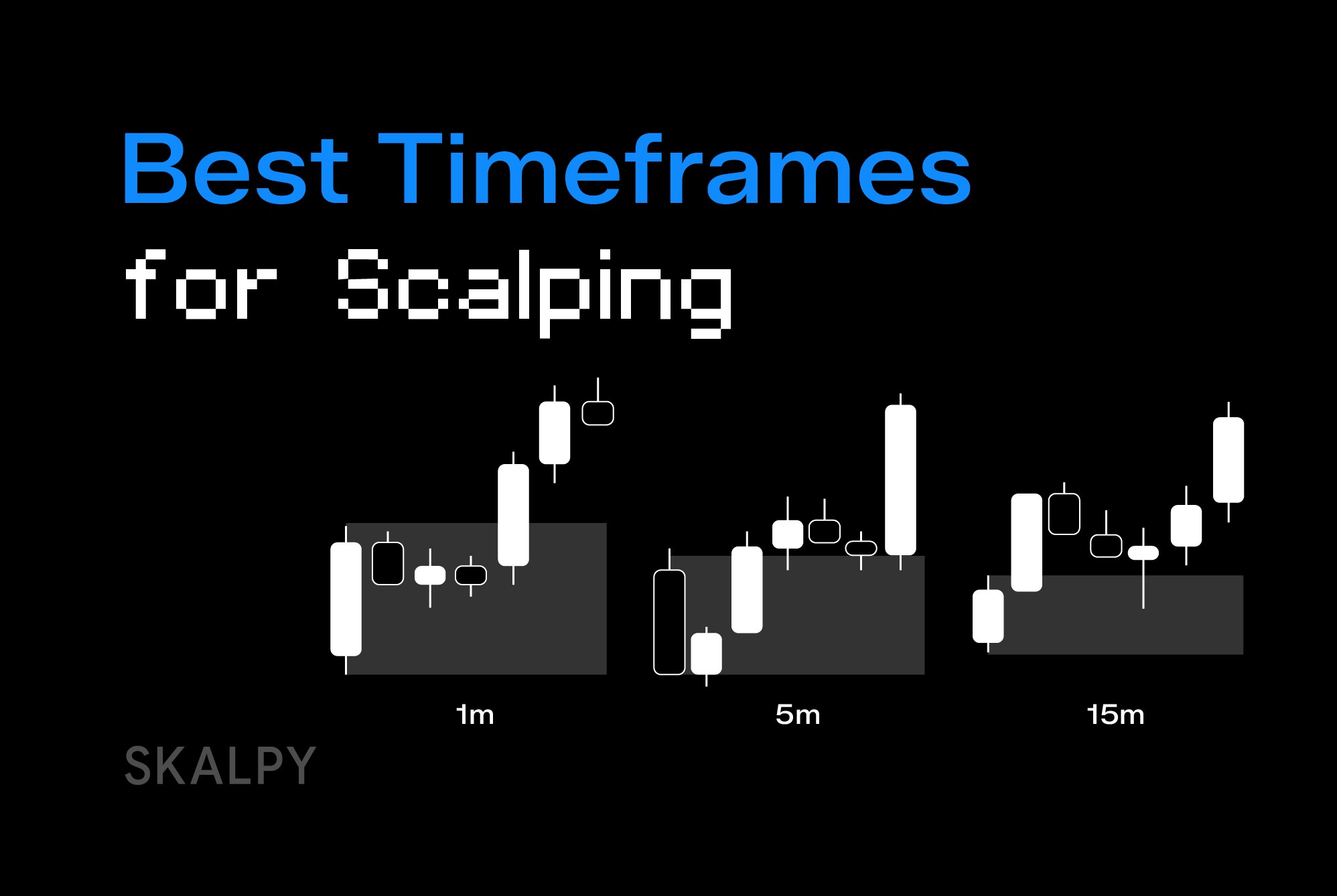
Which Timeframes Work Best for Crypto Scalping?
Discover the optimal timeframes for crypto scalping, from 1-minute to 15-minute charts, and learn how to choose timeframes that match your trading style.
Scalping
Choosing the Right Crypto Assets for Scalping Success
Learn how to select the best cryptocurrencies for scalping based on liquidity, volatility, spreads, and volume to maximize your scalping profitability.